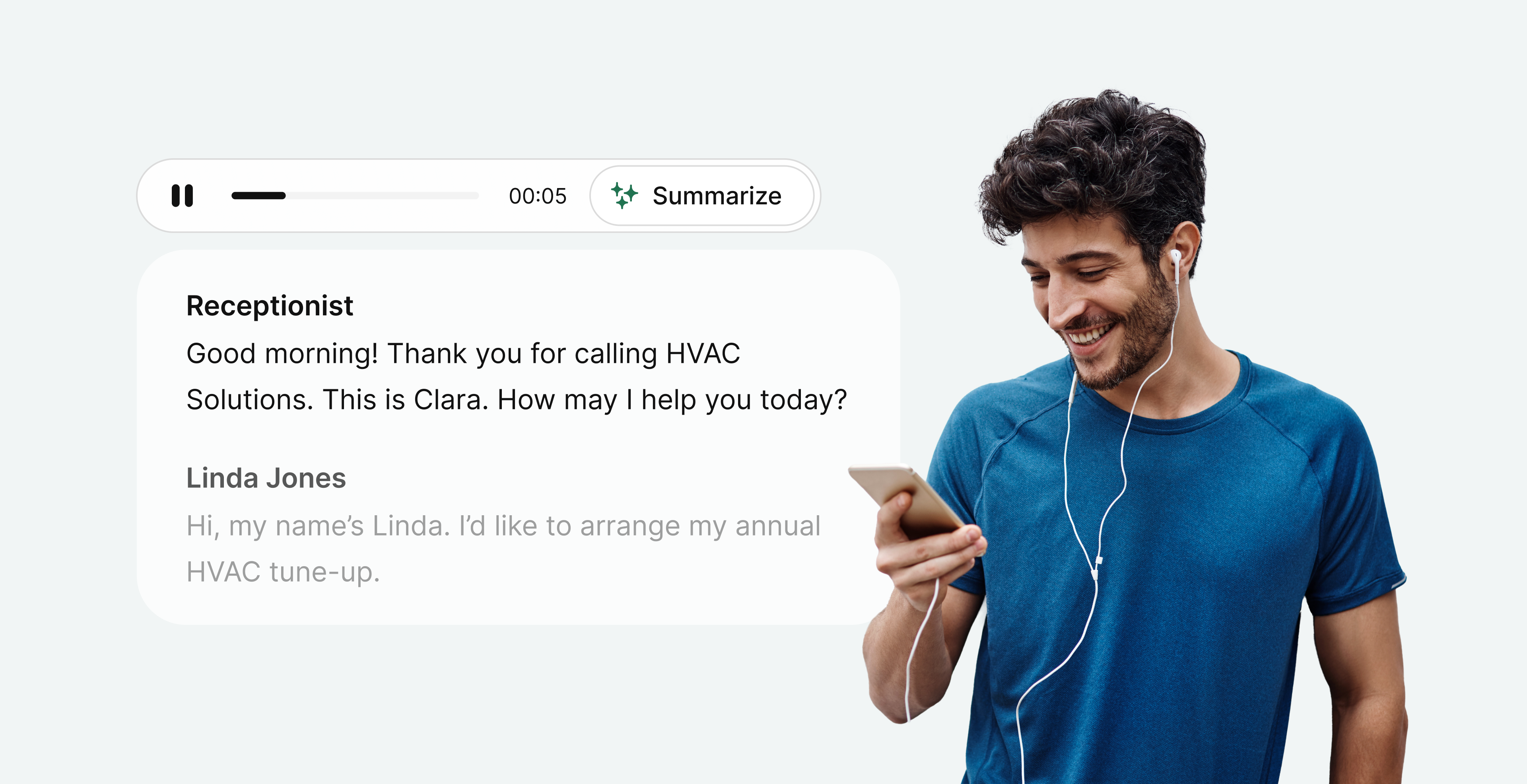
I lost my voice today. Well, it’s not completely gone. I can talk; I just sound like the Crypt Keeper. This cramps my style as a remote call center operator. As the point of contact with customers, I try to keep my voice upbeat and helpful. But sometimes things happen. In this case, cold season struck.
There is a bright side. I’ve been forced to sharpen the other customer service tools in my arsenal. It’s too easy to rely on a chipper tone. But a friendly voice is nothing without these basic customer service skills.
The Golden Rule
Every caller is a person. Even when the phone has been ringing nonstop. Even when the caller is upset and doesn’t want to be soothed. Even when you don’t feel well and you only have five minutes left on your shift. Empathy is easily the most important skill when dealing with people on a daily basis. If you act from a genuine place of empathy, good customer service comes naturally. Put yourself in each caller’s situation and treat them exactly as you would wish to be treated. It’s trite, but it works.
Listen Up
Your voice is only part of the equation. It’s easy to half-listen while figuring out whether to transfer the caller, take a message or access an on-call schedule. Multi-tasking is great; just make sure it’s not taking your attention away from the caller. Take your time. Hear the person out before you decide how to handle it. Show the customer you’ve been listening by repeating back what they’ve said. Don’t parrot them. Put it into your own words. Many times, if a caller has an issue, the simple act of listening with full attention goes a long way to diffusing the situation.
Let It Go
Do not take things personally. If you have a particularly upset caller, remember one thing: They are not mad at you. They are upset with the situation. When faced with anger, a knee-jerk reaction is to get defensive. This helps no one. Have compassion for the caller’s bad day, hang up, and let it go. Don’t let it snowball into your next call.
Those are my top three tips for providing great customer service. I’d love to hear yours!
If your business wants to stand out from the crowd, don’t always chase your customers. Instead, try a more subtle approach that draws customers to you—and have an inbound call center at the ready.
Consumers are savvy. They know you’re selling something, because everybody’s selling something. Checking their email, posting on Facebook, riding the bus, watching a movie, listening to the radio, browsing the web, eating breakfast: People are bombarded by ads from the moment they awake to the moment they fall asleep.
Thanks in part to this advertising overkill, customers wade through this sea of ads armed with spam filters, pop-up blockers, no-call lists and, most importantly, a wary mindset. Proclaim why your product or service is better than your competitions’, and even if you manage to out-shout your competition, your customer probably isn’t listening anyway.
A more subtle, nuanced approach sets your business apart. Old-school strategies such as cold-calling are out of the question. These days, customers respond better to open, honest marketing strategies.
Let your product speak for itself. Let your customer service back it up. Make your brand visible online and through social media, and let word-of-mouth do your advertising. It’s all about drawing in customers, making them seek you out instead of the other way around.
Rather than spending money on an expensive, low-ROI outbound advertising campaign, subscribe to an inbound call center and focus on stellar customer service. You’ll start building exactly the kind of long-term social currency most marketing campaigns dream of.
When customers call, you’ll have someone available no matter what. Use your call center as a lead capture tool—having them gather information from the caller, grading their lead potential and acting accordingly—or use them as an order processing center. Or both.
In advertising, it seems like everyone is shouting. Open availability, great service and a more gentle approach will get heard above the din.
Call answering software has transformed answering services from a digital version of a pen and notepad to a full virtual assistant.
In the past, call centers provided useful services, but their functions were limited. For one thing, answering services were static, typically confined to a building and housing employees who handled calls for one company. Operators’ scripting came in hard copy—paper—and it was difficult to change.
Two things evolved contact centers into the full-service business assets they are today: shared networking and CRMs.
CRM stands for “Customer Relationship Management,” a broadly applied acronym that’s not always easy to define. Wikipedia defines a CRM as “a widely implemented strategy for managing a company’s interactions with customers, clients and sales prospects.” (Helpful but vague, this covers any number of entities, from business strategies to actual software.) Answering services use CRMs to guide agents in customer interactions, manage customer contacts and develop leads.
Using a CRM for customer interactions lets remote operators handle calls for a large variety of companies. Shared software identifies which company the customer is calling and gives agents the correct scenarios and scripting. Because it’s shared, clients can easily change and update their scripts. The same CRM also allows remote operators to access on-call schedules and directories as well as customer websites and online order forms.
The beauty of call-answering software is its flexibility. Call center agents can take advantage of shared networks by working from remote locations. Business owners can make changes to their call-handling as soon as they need them. The answering service, business owners and remote operators can all quickly adapt to changing currents in the customer base, keeping them flexible, relevant and genuinely helpful.
Environmentally-aware companies are discovering that partnering with a virtual phone answering service, as opposed to a brick-and-mortar call center, reduces overall costs and reduces their carbon footprint. Here are a few ways a virtual answering service—one whose operating model relies a dispersed workforce—can reduce a business’ environmental impact.
It eliminates employees’ commutes
Let’s say the average call center employs about 100 phone associates. The American Commuting Survey shows that in 2009, 86% of commuters drove to work, and only 10% of commuters carpooled. So if we estimate that about 86 employees drive to work daily and live about a half of an hour away, those employees are producing roughly 47 tons of carbon dioxide a year (according to the Carbonica commuter calculator). By using a call center whose employees work from home, companies can decrease their daily CO2 emissions.
Virtual answering services are virtually paperless
In the United States, one single office worker goes through 10,000 sheets of paper per year, according to U.S. Environmental Protection Agency. The dispersed nature of virtual contact centers depends on a paperless office culture, with remote business associates relying heavily on chat, email and cloud-based programs (such as Google Docs) to work with coworkers.
No office building means less energy is used
Buildings, and the building sector, accounts for almost half of carbon emissions—more than transportation—with 77% of all electricity produced in the U.S. allocated toward operating buildings. The U.S. Energy Information Administration states that of all commercial buildings, office buildings consume the most energy. Construction and finishing materials, office equipment, lighting, ventilation, heating and cooling: these emissions add up. Call centers are especially energy-consuming, since most operate 24 hours a day. Trading the typical office building for satellite workers at home equals huge annual energy savings and reduced carbon emissions.
Economists are fond of pointing out that there’s no such thing as a free lunch. Ecologists understand that ignoring imbalance in one sector—a spike in anthropogenic carbon emissions, say—damages other sectors, not just environmental. Polluting businesses charge societies and governments in health care, environmental reparation and litigation, resource scarcity, agricultural security, increased regulations and on and on.
Understanding that it’s all connected (and understanding that these costs could return to their source), far-sighted businesses are integrating ecological sustainability into their annual accounting. Sustainably designed business operations are almost always efficient in the long run, less environmentally damaging and give a boost to a company’s brand. Businesses that adhere to the triple bottom line of economic, ecological and social profit are doing more than jumping on some bandwagon. They’re building a long-term business plan.
And a virtual phone answering service can be a strong part of that plan.
A customer contact center can either create the kind of environment that makes callers confident in a company and the way they handle their business. Or not.
Sometimes, when you call a company, you’re connected to a person in a noisy call center with a don’t-care attitude, and you immediately know it’s not going to be easy communicating what you want. Or you might get a person on a cell phone on a job site or in a warehouse, and it feels like you’re talking on a walkie-talkie to someone on the dark side of the moon.
“Hi. Is Jerry there?”
“Krysgarble whrbarts?”
“I SAID, ‘IS JERRY THERE?’”
If this happens, you’re more likely to hang up and never call back than to fight though static to reach to the person you need.
It can be maddening for customers to try talking with someone they can’t hear. Or, worse, with someone who obviously doesn’t care about their request.
Talking with a customer contact center should be more like a meeting with a bespoke tailor or a high-end esthetician. You want to feel you’re in good hands. And obviously, that level of attention has to be extra-special to come across over a phone or chat.
This depends on many factors. The call audio quality, the representative’s tone and empathy, their professionalism in taking control of the call and verifying pertinent information: behavior that demonstrates true help by someone who can address concerns adeptly, quickly and personably.
Not many customer contact centers offer such a high level of customer care, blending robust technology with robust service. Those companies that do stand out from the pack. Chances are, their customers will keep coming back.