





High in North America’s mountain ranges, a quiet partnership has been playing out for thousands of years.
A bird gathers seeds and plants them.
A tree takes root.
An entire ecosystem thrives.
We believe long-term success, in business and in life, depends on recognizing these kinds of connections. The ones that aren’t always visible, but are absolutely essential. That’s why we’re proud to partner with the Whitebark Pine Ecosystem Foundation (WPEF), a science-based nonprofit working to protect one of the continent’s most important and most threatened mountain ecosystems.
Together, we’re not just helping to restore a tree species. We’re supporting biodiversity, strengthening communities, and contributing to conservation efforts that will benefit generations to come.
The delicate balance of a keystone species
Whitebark pine grows where few other trees can. From the Northern Rockies to the Sierra Nevada and Cascade mountain ranges, it clings to high-elevation landscapes shaped by wind, snow, and extreme cold.
But being tough doesn’t mean it can do it alone.
Whitebark pine is a keystone species, meaning entire ecosystems depend on it. Its seeds feed wildlife like grizzly bears and red squirrels. Its roots stabilize fragile mountain soils. Its presence helps regulate snowmelt and water flow, supporting ecosystems and communities far below.
And at the heart of it all is an ancient, unlikely partner: Clark’s nutcracker.
The nutcracker doesn’t just eat whitebark pine seeds; it plants them. By hiding thousands of seeds across the mountains for later use, it unknowingly ensures that the next generation of trees will grow when some are left behind.
Without the nutcracker, whitebark pine cannot regenerate. Without the pine, the nutcracker and many other species lose a critical food source.
It’s a delicate balance. And right now, that balance is under threat.
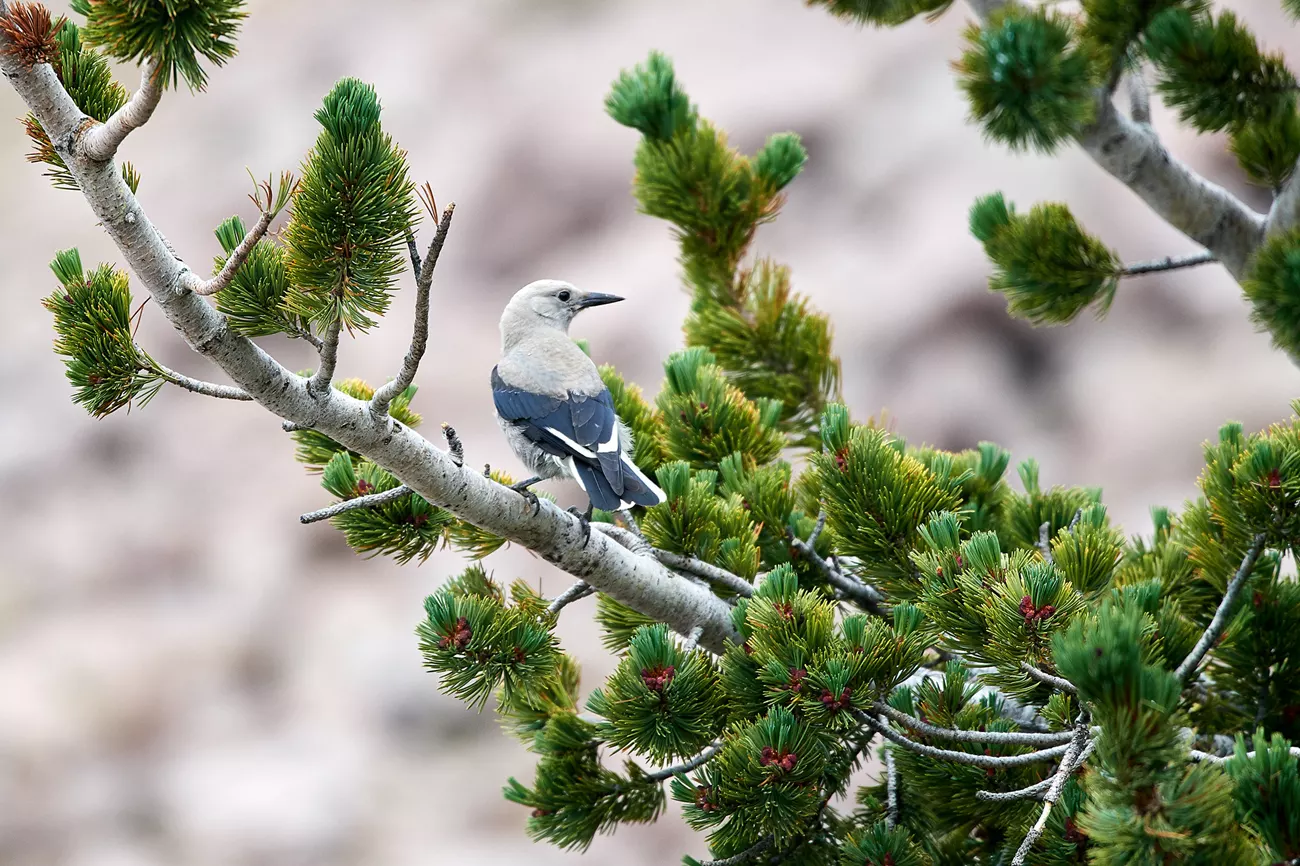
Photo by Frank D. Lospalluto / Flickr CC BY-NC-ND 2.0
A species in decline, but not without hope
Whitebark pine populations have dropped sharply over the past few decades. Threats like white pine blister rust, mountain pine beetles, changing fire patterns, and climate stress have already killed more than half of these trees in some areas.
But there’s hope.
WPEF works alongside tribal nations, federal and state agencies, scientists, and conservation partners to restore whitebark pine ecosystems through research, education, and on-the-ground action.
Their work spans everything from developing rust-resistant seedlings to restoring priority landscapes. They also host conferences, fund student research, and coordinate large-scale restoration planning across multiple states.
One of the most powerful ways this hope is shared is through the short film Hope and Restoration: Saving the Whitebark Pine, produced in collaboration with the Cornell Lab of Ornithology and other conservation partners.
The film brings together voices from across conservation, science, and land management to show what’s at stake, and why there is still time to act.
Protecting balance through science and collaboration
What makes WPEF’s work especially impactful is its emphasis on collaboration and science-led solutions.
From developing the National Whitebark Pine Restoration Plan, which spans seven states and multiple land management agencies, to supporting innovative genome research which aims to identify rust-resistant trees more efficiently, WPEF is helping to redefine what restoration at scale can look like.
These efforts don’t just protect whitebark pine. They also create frameworks that can be applied to other vulnerable species and ecosystems. This strengthens conservation efforts across North America.
Just as significantly, WPEF invests in education and community engagement, working with ski areas, students, researchers, and the public to ensure people understand why whitebark pine matters and how they can help protect it.
Like the relationship between the nutcracker and the pine, this work depends on collaboration. No single organization can do it alone.

Photo Credit: Barry Bollenbacher.
Why this partnership matters
Meaningful connections between people, communities, and organizations are what allow us to thrive.
Our partnership with WPEF reflects a broader commitment at AnswerConnect: to support initiatives that put long-term resilience ahead of short-term gain.
Healthy ecosystems, like healthy businesses, rely on balance, adaptability, and connection. The story of whitebark pine is a reminder that progress doesn’t happen in isolation. It’s built through stewardship, interdependence, and care.
By supporting WPEF’s work, we’re contributing to restoration efforts that protect biodiversity, support local communities, and preserve landscapes that play a vital role in environmental stability.
Looking ahead
Whitebark pine has survived for centuries in some of the most extreme conditions on the continent.
With continued collaboration, research, and support, these ancient trees can continue to thrive. And the nutcrackers that sustain them can keep their centuries-old dance alive.
We’re proud to stand alongside the Whitebark Pine Ecosystem Foundation in this work, and to support a future rooted in sustainability, partnership, and hope.
To learn more about whitebark pine restoration or how to get involved, visit the Whitebark Pine Ecosystem Foundation.


