



“The future belongs to those who believe in the beauty of their dreams.” – Eleanor Roosevelt
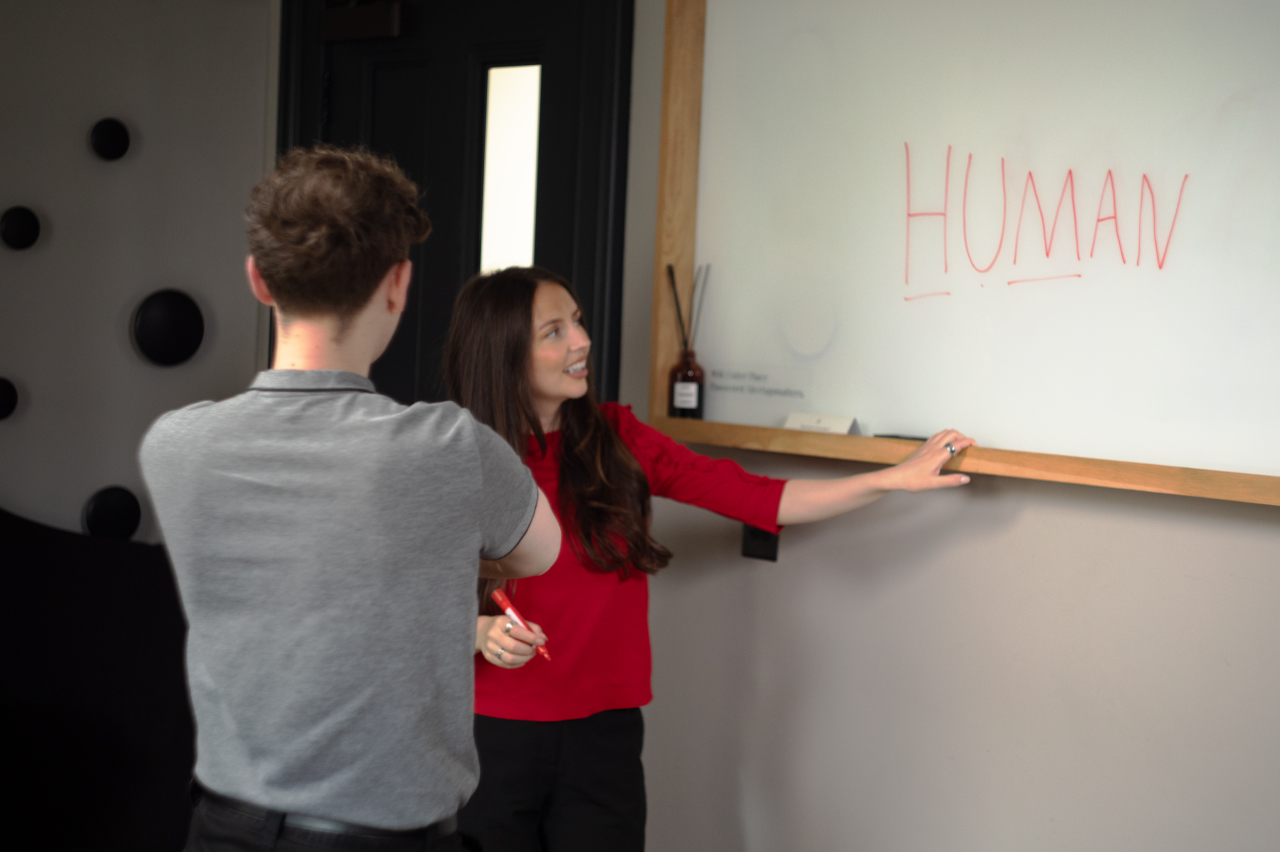
Creating a business is incredibly human. It takes passion, drive and a dream. The human soul of your business is what makes it successful. Yet more and more businesses are trading that authentic experience for something cold and robotic: AI.
In her recent webinar, The Secret to Winning Customers (and Real Connection) in an AI-Powered World, our CEO Natalie Ruiz made a simple case: customers want people, and you don’t have to give up speed to give them one. Here’s what she covered, plus a 4-question test for deciding where AI actually belongs.
Human moments matter
Every authentic, meaningful experience in life involves a real person. In business, that might be the time you were feeling low and the grocery store assistant asked how your day was going. Or, as Natalie describes, the dental practice that turned an appointment people feared and dreaded into one they looked forward to.
People can read between the lines. They notice what isn’t being said, spot when something doesn’t add up, and know when to break the script to do the right thing. The shortest distance between “I have a problem” and “I have a solution” is connecting with a person. So why are businesses increasingly replacing humans with AI customer service?
AI is eroding trust, loyalty and conversions
There’s a lot of hype and promise around AI agents, but the data tells a different story. When customers need help, they don’t want a AI customer experience. They want a person.
Our latest research with OnePoll explores this in more detail, with 45 AI customer service statistics revealing what customers really think about AI, human interaction, and the experiences businesses provide.
- Nearly 1 in 3 (31%) would hang up if connected to AI.
- 85% would rather speak with a real person than an AI system when calling a business.
- 79% are more likely to choose a business where a human answers the phone.
- 73% say they’re more loyal to companies that employ people for customer interactions.
And the sentiment is getting stronger, not weaker. AnswerConnect has conducted this research year on year, and each year the result moves further toward Team Human. You might expect people to warm to AI as they use it more. Instead, they’re becoming more certain that they do not want an AI customer experience.

Think about the calls that really matter: booking a doctor’s appointment, getting an estimate for a roof repair, trying to reach an attorney. These calls are often urgent, stressful, expensive or personal. The caller wants reassurance and to feel understood. AI agents can’t care about the outcome, can’t empathize, and can’t give the confidence that comes from knowing a real person has it handled.
What an AI customer experience means for your bottom line
This isn’t only about how customers feel. It affects business outcomes:
- Trust: the first interaction sets the tone for the whole relationship.
- Loyalty: customers remember how they were treated when they needed help.
- Buying decisions: a bad front-line experience can send a customer straight to a competitor.
Take the 1 in 3 stat. Almost a third of customers hang up when they reach a bot, before any conversation has happened. Think about everything you spent to get that phone to ring: marketing budget, advertising, SEO, referrals, and reputation. A third of that effort can disappear at the exact moment a customer is ready to engage.
That doesn’t mean the other two-thirds are happy with an AI customer experience either. More than a third weren’t sure. A bot on the front line might look efficient on paper, but it can cost more in lost customers than it saves.
GRT Realty learned this the hard way: “I was using an AI service, and my leads dropped to nothing… As soon as the robot answered, people hung up.”
With an automated system on the phones, callers hung up on the robot and leads disappeared. After switching to live, 24/7 human receptionists, they grew from 6 agents to 70.
Why the trade-off doesn’t have to happen
AI agents are sold on a familiar list of promises: it’s fast, it’s always on, it never misses a call, and it’s consistent every time. That’s the deal businesses think they’re making. They give up a little human warmth and get speed and efficiency in return.
But here’s the thing: people can do all of that too. With the right team behind you, there’s no trade-off to make. As Natalie pointed out in the webinar, there’s a big difference between AI being technically capable of handling a call and handling it well.
- Fast? So are people. With AnswerConnect, a real person answers your calls in one ring or less. That’s an immediate connection, with no menus, and no “please repeat that.”
- Always available? So are people. Real receptionists answer 24/7/365, including nights, weekends and holidays, so you never miss a call or a lead.
- Captures every lead? People do it better. People build rapport, ask the right follow-up questions, and keep callers on the line instead of losing them to the hang-up button.
- Converts? That’s where people really stand out. Callers trust people, and trust is what turns a call into a lifelong customer.
- Consistent? AI is consistent, but no two customers are the same. Sometimes the right move is to go the extra mile, slow down, or handle a sensitive moment with care. The best businesses aren’t consistently the same. They’re consistently great.
With people, you don’t have to trade speed for soul; you get both.

How to know where to put AI: 4 questions to ask
Being Team Human doesn’t mean being anti-AI. In fact, most businesses should be using it. The key is putting it in the right places while protecting the moments that matter. In the webinar, Natalie shared a simple litmus test. Before handing a task to AI, ask yourself:
- Is it predictable? If a task is the same every time, follows clear rules and has a clear right answer, it’s a strong candidate for AI.
- Is it personal? When someone is anxious because their roof is leaking, they’re waiting on health results, their home is infested, or their family is affected, they want to be heard by someone who cares.
- Is there complexity or judgment involved? Real life rarely follows a script. Nuance, exceptions, and emotion call for someone who can read between the lines.
- What’s at stake? This is the biggest one. If the interaction goes wrong, what do you lose? A customer, a sale, your reputation? The higher the stakes, the stronger the case for a person.
People lead, and AI supports. That’s where the real advantage is.
Stay true to who you are
Every business starts with a dream. For most founders, that dream was never to build something cold and automated. It was to build something that matters to people.
AI is a tool. Use it where it truly helps, and keep your customer service fast and human.
As Natalie put it at the end of her webinar, a new tool shouldn’t change your brand, the promise you make to your clients, or how you care for them. Stay true to who you are as a business.
Your business was built on a dream. Don’t trade the people who bring it to life for a bot.



